Specialty Psychiatric Services • New Jersey: in-person evaluations + in-person or telehealth follow-ups • Florida: telehealth
AuDHD: What It Means When Autism and ADHD Occur Together
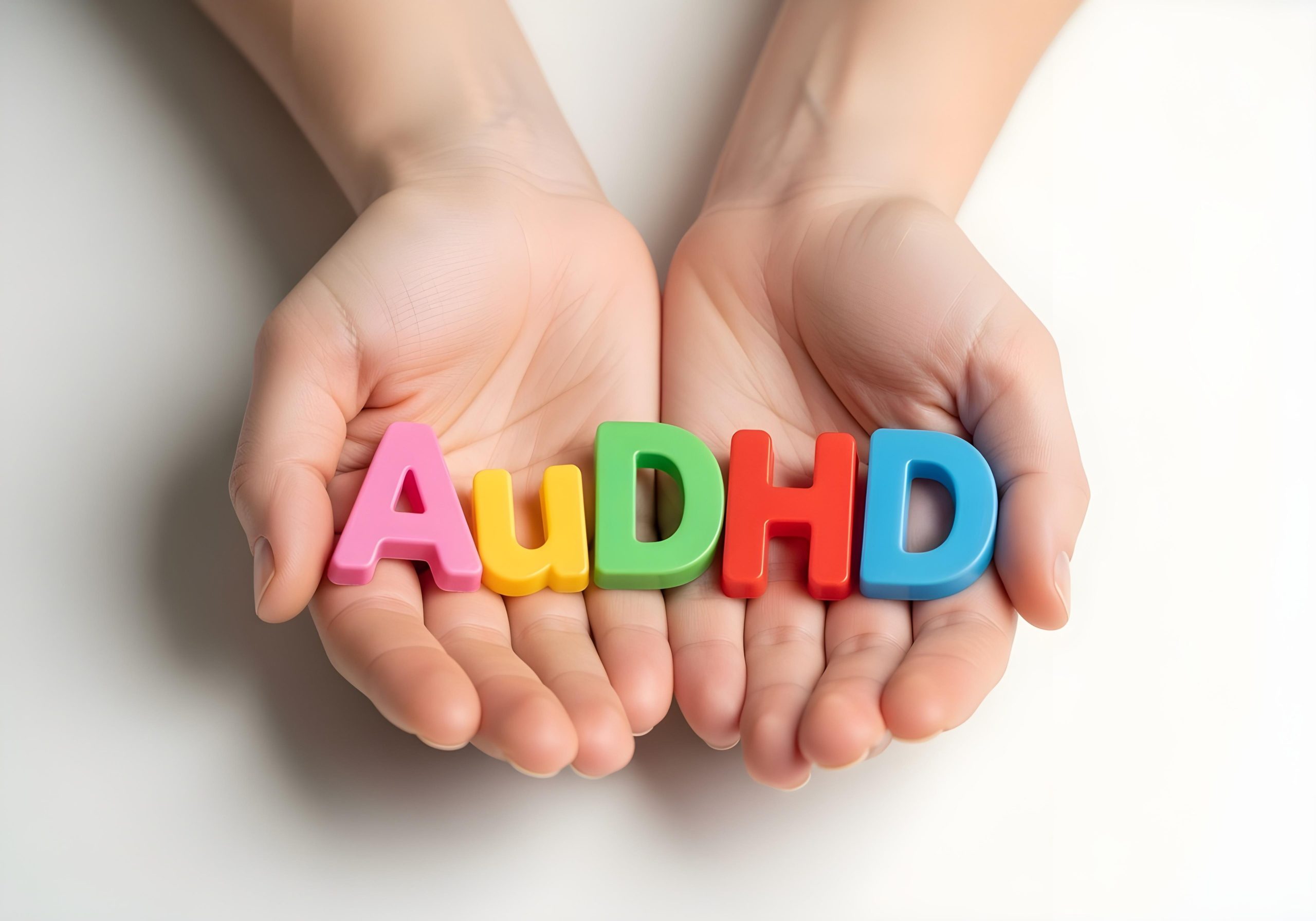
AuDHD is a term many people use for autism and ADHD occurring in the same person. It has spread quickly online, and for good reason: for many adults and families, it finally explains a pattern that neither diagnosis seemed to cover on its own. Each condition can hide the other, which is part of why people with both often go years without a clear answer.
This post explains what AuDHD means, where autism and ADHD overlap and where they pull in different directions, what AuDHD looks like in adults, children, women, and girls, and how to get a proper evaluation.
What AuDHD Means, and What It Is Not
AuDHD is not an official diagnosis. It is community shorthand for having both autism spectrum disorder and ADHD. What matters clinically is that both conditions can be diagnosed together. Until the DSM-5 was published in 2013, clinicians were not allowed to diagnose both at once, which is one reason so many adults went undiagnosed or were given only one label.
Today, a person can be diagnosed with both, and research increasingly recognizes that the two conditions often occur together. People also use different language for themselves, and it is worth following a person’s own preference.
Where Autism and ADHD Overlap
The two conditions share more than most people expect. Common overlapping traits include:
- Executive function differences. Planning, starting tasks, switching between activities, and managing time can be hard in both.
- Sensory sensitivity. Sounds, lights, textures, or crowded spaces can feel overwhelming.
- Emotional intensity. Big reactions and difficulty settling after a stressful moment show up in both.
- Intense, narrow attention. Focus can lock onto an interest and be hard to redirect.
- Stimming. Repetitive movements or sounds can help with focus and regulation.
Stimming is a good example. People often ask, “can you stim with ADHD?,” and the answer is yes. Stimming is more often associated with autism, but many people with ADHD stim too, and in someone with both, it can serve two purposes: calming the nervous system and helping with focus.
Where They Pull in Different Directions
What makes AuDHD confusing is that some traits seem to contradict each other. Autism often brings a strong preference for routine and predictability. ADHD often brings a need for novelty and stimulation. A person with both can crave structure and then feel bored or trapped by it, building a routine and abandoning it, or wanting change and then feeling overwhelmed when it arrives.
Social differences can mix too. ADHD can mean interrupting, talking fast, or losing the thread of a conversation. Autism can mean difficulty reading social cues or exhausting effort to keep up with unwritten social rules. Together, a person may be socially eager and socially drained at the same time.
These push-pull patterns are one reason people with AuDHD often say neither diagnosis alone fits.
AuDHD Symptoms in Adults and Children
Because it combines two conditions, AuDHD symptoms vary widely. Signs that people with both often describe include:
- Difficulty starting tasks, even ones they want to do, alongside distress when routines change
- Sensory overload in noisy, bright, or crowded places
- Intense interests or hyperfocus, followed by exhaustion
- Trouble with transitions, like leaving the house or switching tasks
- Social fatigue and a need for long recovery time after being around people
- Emotional reactions that feel fast and hard to stop
- Stimming or fidgeting to stay regulated
In children, this can look like meltdowns after school, strong reactions to changes in plans, trouble with friendships despite wanting them, or a gap between intelligence and day-to-day functioning. In adults, it often shows up as burnout, trouble keeping up with daily tasks, and a long history of feeling different without a clear reason.
Sensory Overload and Meltdowns in AuDHD
Sensory overload is one of the most common AuDHD experiences. A loud restaurant, bright store lights, a scratchy tag, or too many people talking can stack up until the nervous system hits its limit. People often search “why is my mind so loud” when sensory input and racing thoughts pile up at the same time.
When the limit is reached, the result can be an ADHD overstimulation meltdown: a sudden wave of overwhelm that looks like anger, tears, or shutting down. These are not tantrums or choices. They are the nervous system running out of capacity. Meltdowns are discussed in both autism and ADHD, and in AuDHD they can arrive faster because both sets of triggers apply.
Helpful steps include noticing early warning signs, reducing input before the limit is hit with headphones, quiet breaks, or dimmer lighting, and planning recovery time after demanding events.
AuDHD in Women and Girls
AuDHD is often missed in women and girls. Girls with ADHD are frequently overlooked because they are quiet, and girls with autism are frequently overlooked because they learn to copy social behavior. When both are present, each can hide the other. Our post on ADHD in girls looks at why attention problems in girls get missed, and AuDHD adds another layer.
AuDHD symptoms in women often include years of masking, anxiety, sensory overload at work, and a late diagnosis, sometimes after a child is evaluated. Many women and girls with AuDHD spend huge effort appearing organized, socially at ease, and calm, which looks like competence but is costly. Our other post on ADHD masking covers what this looks like and what it costs, including the burnout that tends to follow. Autistic burnout, which researchers describe as exhaustion, loss of skills, and reduced tolerance for stimulation, can resemble ADHD burnout, which is another reason people reach adulthood without a clear answer.
Why AuDHD Gets Missed
Several things work against recognition. People are often diagnosed with one condition first, and the other gets overlooked because the first label seems to explain enough. Anxiety and depression can also take the attention, since they are the symptoms that bring people in. Masking hides both.
And because each condition can look like the other, a clinician who is looking for only one may misread the picture. ADHD can look like difficulty with social cues, and autism can look like inattention. A thorough evaluation looks at history across childhood and adulthood, across settings, and across both conditions.
Online AuDHD Tests and Getting Evaluated
Search results for AuDHD test are full of online quizzes. These can help someone recognize their own patterns and decide to seek help, but they cannot diagnose. They are not validated diagnostic tools, and results depend on how a person reads each question.
A proper evaluation looks at developmental history, current functioning, sensory experiences, social communication, attention, and mood, often with input from family members or others who know the person well. Our overview of ADHD testing in NJ explains what an evaluation involves. Our team evaluates ADHD along with related conditions like anxiety and depression, and can talk through what next steps make sense if autism is also a question.
What Support for AuDHD Looks Like
There is no single plan, since AuDHD looks different in every person, but support usually combines several pieces:
- Accommodations and environment. Headphones, lighting changes, written instructions, and predictable schedules reduce daily strain.
- Routines with flexibility built in. A structure that includes planned variety tends to work better than a rigid one or none at all.
- Skills-based therapy. Cognitive behavioral therapy (CBT) builds planning and organization skills, and dialectical behavior therapy (DBT) strengthens emotion regulation and distress tolerance. Our team offers both for adults.
- Care for co-occurring anxiety and depression, which are common alongside both conditions.
- Medication, when appropriate. ADHD medication decisions belong with a prescriber who knows the full picture, since the right plan depends on the whole picture, including both conditions.
For children, support also includes home and school. Our team offers family therapy and parent support and training, and school accommodations can address sensory and organizational needs.
Questions NY/NJ Adults and Parents Ask About AuDHD
Is AuDHD a real diagnosis? AuDHD is not a formal diagnostic term, but the conditions behind it are. Autism spectrum disorder and ADHD can both be diagnosed in the same person, and many people have both.
What is the difference between AuDHD and ADHD? ADHD refers to differences in attention, impulse control, and activity level. AuDHD means ADHD along with autism, which adds differences in social communication, sensory processing, and a need for predictability. Because the two overlap, they can be hard to tell apart without a thorough evaluation.
Can you have both autism and ADHD? Yes. Since the DSM-5 was published in 2013, both can be diagnosed in the same person.
Can an online AuDHD test diagnose me? No. Online quizzes can point toward patterns worth discussing, but a diagnosis requires a clinical evaluation.
Can adults be diagnosed with AuDHD later in life? Yes. Many adults are evaluated in their thirties, forties, or later, sometimes after burnout or after a child is evaluated.
Neither Diagnosis Alone Tells the Whole Story
For many people, discovering AuDHD feels like finally getting the missing piece. It does not change who a person is. It explains why advice written for one condition kept falling short, and it points toward support that fits both. If you recognize yourself or your child in this, a full evaluation is the best way to get a clear answer.
Talking with an ADHD doctor for adults can help you work out what is behind your own patterns. If you are concerned about your child, reach out to our team to talk through what an evaluation with us would look like.
Sources
- National Institute of Mental Health, “Attention-Deficit/Hyperactivity Disorder: What You Need to Know”
- National Institute of Mental Health, “Autism Spectrum Disorder”
- Grzadzinski R, Dick C, Lord C, Bishop S. “Parent-reported and clinician-observed autism spectrum disorder (ASD) symptoms in children with attention deficit/hyperactivity disorder (ADHD): implications for practice under DSM-5.” Molecular Autism. 2016;7:7.
- Raymaker DM, et al. “‘Having all of your internal resources exhausted beyond measure and being left with no clean-up crew’: defining autistic burnout.” Autism in Adulthood. 2020;2(2):132-143.
- Child Mind Institute, “What Is AuDHD?”
- American Psychiatric Association, “What Is the DSM?”